
The Venezuela Story Does Not Stack Up
Is this just more theatre to feed our fake world?

The Venezuela ‘thing’ has a whiff of fakery/infotainment about it.
Kidnapping Maduro obviously would have no effect on the drug trade as there would a thousand other men ready to fill the void (if indeed Maduro is even involved in the cocaine industry). The refrain, ‘all wars are resource wars’ is the fallback explanation for whatever has gone on in Venezuela in recent weeks.
I have some logic issues with the fallback position:
If the US wanted Venezuela’s oil and Maduro refused why not offer him a deal he could not refuse. And if he refused drop a bloody horse head into his bed.
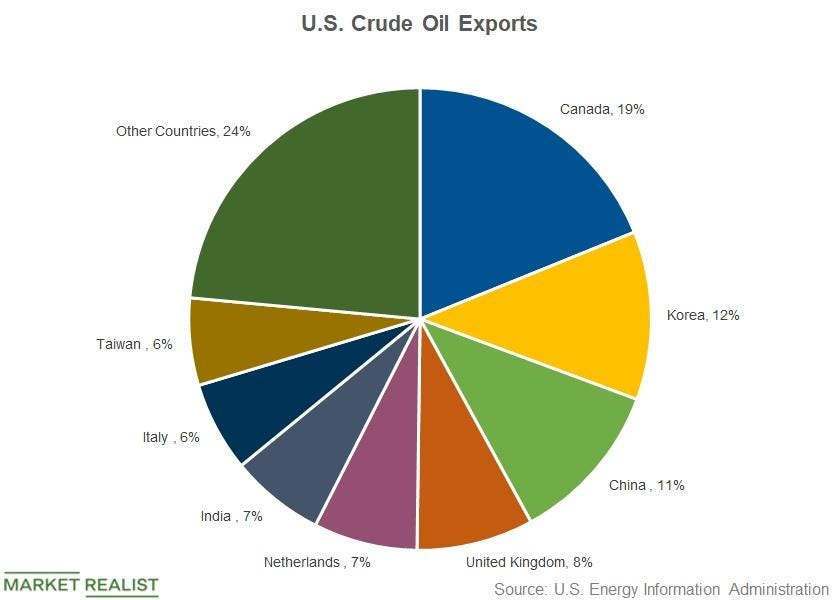
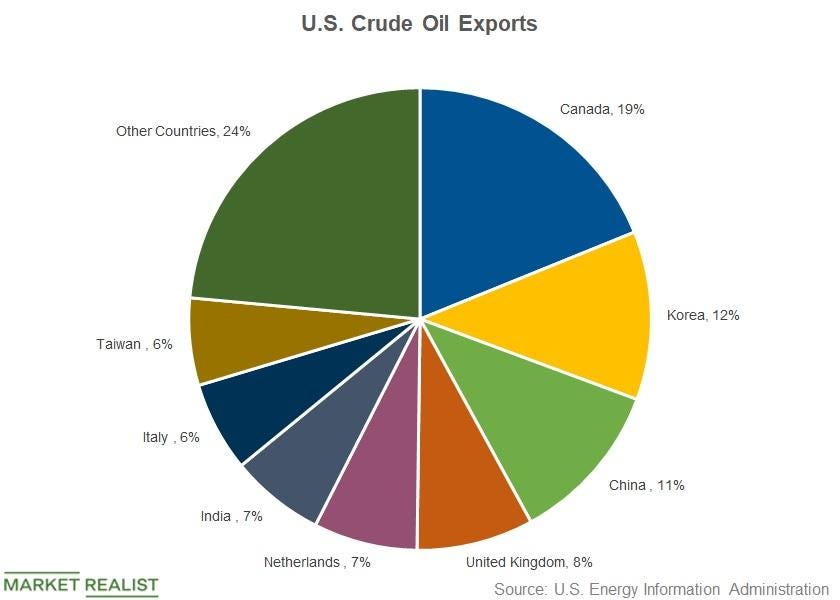
I cannot see why the USA would take issue with countries including China being on the receiving end of oil from Venezuela. America exports huge amounts of oil to China. It’s a globalized, interdependent economy and if a key country is deprived of energy, that country collapses taking all others down with it.
3. Most importantly, Venezuelan oil is garbage oil.
Venezuela’s Crude Reality
Much has been written about the Trump administration’s actions in Venezuela and the supposed implications for the global oil market, though at this early stage it is already apparent that the subject is being treated with more urgency than understanding. The situation, in truth, is still in its opening act, and what lies ahead is unlikely to be simple. A great many articles have gravitated toward the more theatrical elements of the story, yet comparatively few have paused to examine the less glamorous—but far more consequential—character of Venezuelan crude itself.
In short, we do not believe Venezuela will be able to add much in the way of production without oil prices as high as $85 per barrel.
In brief, we believe that apart from the occasional seized tanker cargo making its way to market, the recent developments are unlikely to have a meaningful impact on oil markets in the near term. Venezuela does, without question, possess enormous oil reserves—roughly 220 billion barrels by most estimates, enough to place it at the top of the global reserve table—but the act of converting those reserves into sustained production has always been, and will remain, an undertaking of formidable scale.
Venezuelan crude is, almost without exception, heavy and sour. “Heavy” in this context signifies a crude that has undergone partial oxidation underground, a process that renders it stubbornly resistant to flow and correspondingly difficult to produce. The other major source of heavy oil is Canada, where the resource is commonly known as the oil sands. In Canada, heavy oil was for many years not pumped at all but mined, using vast earth-moving machines. That practice eventually gave way to steam-assisted gravity drainage, in which wells are drilled, steam is injected to liquefy the bitumen, and the resulting fluid is drawn out through a second horizontal bore.
Venezuela’s geology permitted a different, if hardly effortless, approach. Powerful pumps were installed that, with considerable exertion, could lift the partially degraded crude to the surface. Complicating matters further, Venezuelan heavy oil is also notably sour, containing elevated sulfur content. This characteristic demands specialized handling at the wellhead and equally specialized equipment at the refinery. The process, taken as a whole, is intricate, capital-intensive, and unforgiving of neglect.
The country’s production history has reflected this complexity for decades. According to the BP Statistical Review, Venezuelan output peaked at 3.8 million barrels per day in 1970, when conventional production reached its high point and began to decline. By 1985, production had fallen to roughly 1.7 million barrels per day. Beginning in the late 1980s and continuing through the 1990s, Western oil companies invested heavily in Venezuelan heavy-oil projects, producing a sharp recovery. By the end of that decade, output was again approaching 3.5 million barrels per day.
When Hugo Chávez came to prominence in the early 2000s, Venezuela moved to nationalize its oil assets, prompting most Western producers to withdraw. The national oil company, PDVSA, then experienced a debilitating strike in 2002–2003, which sharply curtailed production. After the strike ended, output staged a temporary recovery, reaching approximately 3.3 million barrels per day by 2006. That year marked another turning point: contracts were rewritten or voided, capital spending collapsed, and skilled labor began to leave the country. By 2015, production had slipped to 2.8 million barrels per day, before entering a far steeper decline. According to the most recent IEA data, Venezuelan production now stands near 800,000 barrels per day—nearly an eighty percent drop from levels seen in 2000.
In light of recent events, many investors have begun to ask how quickly Venezuelan production might rebound once more. We regard this line of thinking as premature. Much of the infrastructure installed during the late 1990s and early 2000s has since been dismantled or stripped for scrap as the country descended into severe poverty. During the PDVSA strike two decades ago, the disruption was brief and occurred while the broader economic fabric remained somewhat intact. As a result, infrastructure survived largely untouched, allowing production to recover. Today’s circumstances bear little resemblance to that earlier episode.
Restarting Venezuelan heavy-oil production would require capital investment on an extraordinary scale. As one illustrative example, an older industry document indicates that supermajors spent approximately $23 billion in 2010 to bring 600,000 barrels per day of heavy-oil capacity online—roughly $40,000 per flowing barrel. More recent rules of thumb for Canadian heavy oil suggest figures closer to $100,000 per flowing barrel, implying that adding one million barrels per day could require on the order of $100 billion once the cost of an upgrader—an essential component of heavy-oil production—is included.
We will return to Venezuela in a future letter, but as a preview, we do not believe that a Venezuelan heavy-oil project could reasonably generate a ten percent return on investment, given the magnitude of the upfront capital required. When one further considers that investors would almost certainly demand an additional premium to compensate for geopolitical risk, the case becomes weaker still.
What oil prices are needed to bring back Venezuelan production? We estimate that $70 per barrel would be the absolute minimum required to bring back online 2-300,000 b/d of brownfield production and generate a 15% rate of return. To bring on anything more than that would likely require WTI to trade for $90-100 per barrel, and take several years.
Rob Conners arrives at a similar conclusion in a recent post on his Crude Chronicles Substack, observing that for Venezuelan heavy oil to be economically viable, it would require either extraordinarily generous fiscal terms or substantially higher oil prices. Given the political risks inherent in offering such favorable terms, the more plausible conclusion is that, absent much higher prices, Venezuelan production is unlikely to increase materially—and even then, only after a period measured in years rather than months. Source
“Uninvestable”: Trump’s $100 Billion Venezuela Gamble Meets Oil Industry Reality
President Donald Trump’s push for U.S. oil companies to commit at least $100 billion toward rebuilding Venezuela’s energy industry is meeting significant resistance from the very executives he is courting, according to Bloomberg.
Although the White House projects confidence, industry leaders are warning that Venezuela remains too unstable for major investment, with Exxon Mobil CEO Darren Woods describing the country bluntly as “uninvestable.”
At a closed-door meeting Friday with roughly 20 energy executives, Trump said he expected an agreement “today or very shortly thereafter” to restart large-scale drilling in Venezuela following the removal of Nicolás Maduro. He applied direct pressure, telling the group, “If you don’t want to go in, just let me know, because I’ve got 25 people that aren’t here today that are willing to take your place.”
Publicly, many executives praised the opportunity. Privately and in their remarks, they expressed deep concern about risk, governance, and long-term returns. Woods delivered the strongest warning, pointing to Venezuela’s unstable business environment and past expropriations. “If we look at the legal and commercial constructs and frameworks in place today in Venezuela today, it’s uninvestable,” he said, noting Exxon’s assets there had already been seized twice. He questioned whether any future protections would hold: “How durable are the protections from a financial standpoint? What will the returns look like? What are the commercial arrangements, the legal frameworks?” Even so, he added that Exxon would be willing “to put a team on the ground” if invited and given proper security guarantees.
The Punchline to this heap of shit reminds of the Shit Show in New Zealand.
The meeting included moments of levity over massive past losses. When ConocoPhillips CEO Ryan Lance said his company had absorbed a $12 billion hit in Venezuela, Trump replied, “Good write-off,” prompting Lance to respond, “It’s already been written off.” Source
If this is more than infotainment and we are in a position where we need this shitty, expensive to produce and refine oil, then this is without a doubt, scraping the very bottom of the barrel.
This would be akin to an alcoholic picking beer bottles out of a bar’s dumpster and draining the dregs along with the backwash and stubbed out cigarettes at the bottom.
I am leaning as if I was walking against a hurricane-force wind in the direction of infotainment.
Ocean of Oil and Gas found on the Moon

Cold Weather and Supply Concerns Drive Natural Gas Prices Higher


The internet is always good for a laugh, if only an eyebrows-raising one. This little "FB Reels" jewel surprised me - a digging through jelled muck:
https://www.facebook.com/reel/847424298085085
Excuse me: "fuel oil". Whew.
But then I remembered being in Vancouver in the 1970s and reading that serious consideration was being given to steaming hydrocarbons out of the Alberta sands. This conjecture was reported with a wink and a dig in the ribs, as in "What are those crazy oilies up to now?"
Jump cut to 2026 and the bottom of the barrel is squealing as it is scraped dry. There better be oil & gas on the moon. Or else.
It makes perfect sense. The government is planning for armed international conflict and a breakdown in international trade.
Under these circumstances, direct control of regional resources is essential. Barring geopolitical competitors from those resources is essential.
Greenland will be next, by whatever means proves expedient.